Inherited sports cards
You inherited sports cards. Start here.
Your collection might include old boxes, binders, complete sets, graded cards, loose cards or baseball, basketball, football and hockey cards. You do not need to identify every card before getting started.
Free to submit • No obligation to sell • Photos optional
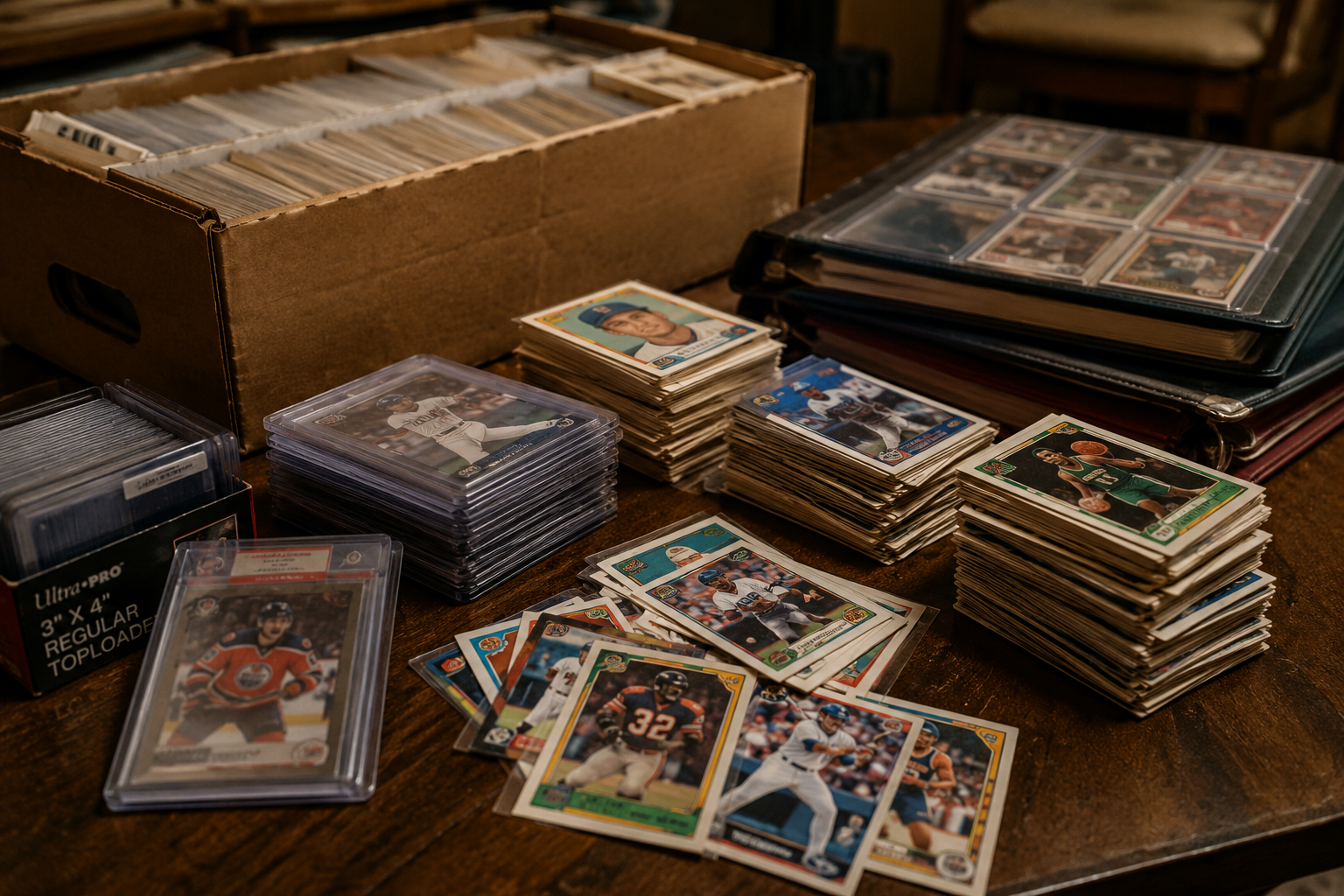
Collectibles shown are illustrative examples and do not indicate the contents or value of any submitted collection.
Sports cards across four major sports
Baseball, basketball, football and hockey all fall under one Sports Cards category. You don't have to choose a sport before submitting.
However it's stored, it counts
Boxes of loose cards
Inherited collections often arrive in ordinary storage boxes that have been packed away for years.
Binders and pages
Cards in plastic sleeves, sometimes organized by set, team or player.
Complete and partial sets
Factory sets in original boxes, or sets a collector assembled card by card.
Top-loaders and sleeves
Individually protected cards a collector set aside as more important.
Graded cards in sealed cases
Cards authenticated and graded by a third party, sealed in hard plastic holders.
Older, unfamiliar cards
Small, thin cards that clearly aren't modern. Worth mentioning if you notice them.
Guides
Helpful reading about inherited sports cards
Plain-English explanations of the process. No valuations, no collecting advice.
- I inherited sports cards. Where do I start?
- How do I get inherited sports cards evaluated?
- Where can I sell inherited sports cards?
- What information should I gather about inherited sports cards?
- Appraisal, evaluation and offer: what's the difference?
- Dealer vs. auction vs. consignment: what's the difference?
Common questions about inherited cards
Do I need to sort the cards first?
No. If you're unsure how to handle or organize an inherited collection, you don't need to make major changes before speaking with a professional. Describe how the cards are stored and leave them as they are.
Does this include basketball, football and hockey?
Yes. Baseball, basketball, football and hockey cards all fall under the same Sports Cards category. You don't need to separate them by sport.
What if the cards are in binders, boxes or sealed holders?
All of that is normal. Loose cards, binder pages, top-loaders, complete sets and graded cards in sealed cases are all worth mentioning in your description.
Can you tell me if there's something valuable in there?
No. We don't appraise or value collections. That's what independent professionals do after looking at the actual cards — and it's why speaking with more than one can be useful.